Kombu & Celery Leaves ‘Tsukudani’. Contribute to celery/kombu development by creating an account on GitHub. Kombu (from Japanese: 昆布, romanized: konbu) is edible kelp mostly from the family Laminariaceae and is widely eaten in East Asia. It may also be referred to as dasima (Korean: 다시마) or haidai (simplified Chinese: 海带; traditional Chinese: 海帶; pinyin: Hǎidài).
 In this video, I teach you what kombu is and why it is so good for healthy diets and weight loss.
Please note that this video was originally posted live on.
Kombu is an edible kelp, a type of seaweed, and it's responsible for umami in many Japanese recipes including as Kombu (昆布 konbu) is edible kelp, a type of seaweed, widely consumed in East Asia.
In this video, I teach you what kombu is and why it is so good for healthy diets and weight loss.
Please note that this video was originally posted live on.
Kombu is an edible kelp, a type of seaweed, and it's responsible for umami in many Japanese recipes including as Kombu (昆布 konbu) is edible kelp, a type of seaweed, widely consumed in East Asia.
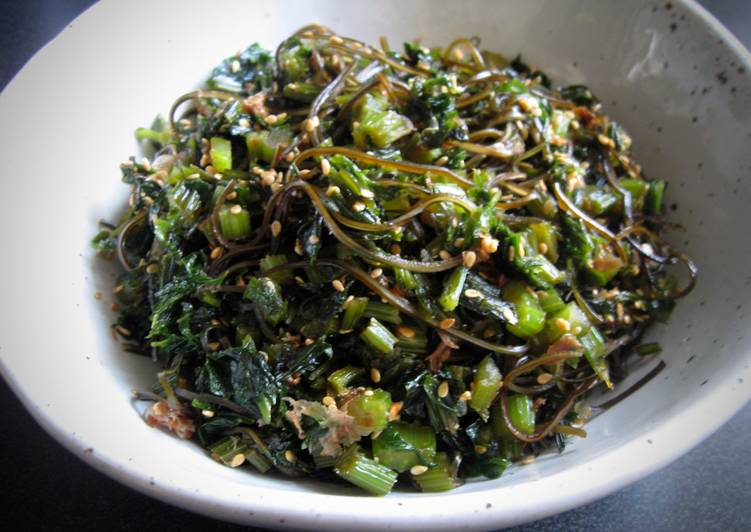
Hey everyone, it's me again, Dan, welcome to my recipe site. Today, I will show you a way to make a distinctive dish, kombu & celery leaves ‘tsukudani’. One of my favorites. This time, I'm gonna make it a little bit unique. This will be really delicious.
Kombu & Celery Leaves ‘Tsukudani’ is one of the most popular of recent trending foods on earth. It is easy, it's fast, it tastes yummy. It's appreciated by millions daily. Kombu & Celery Leaves ‘Tsukudani’ is something which I've loved my entire life. They're fine and they look fantastic.
Contribute to celery/kombu development by creating an account on GitHub. Kombu (from Japanese: 昆布, romanized: konbu) is edible kelp mostly from the family Laminariaceae and is widely eaten in East Asia. It may also be referred to as dasima (Korean: 다시마) or haidai (simplified Chinese: 海带; traditional Chinese: 海帶; pinyin: Hǎidài).
To get started with this recipe, we have to first prepare a few ingredients. You can have kombu & celery leaves ‘tsukudani’ using 11 ingredients and 4 steps. Here is how you cook it.
The ingredients needed to make Kombu & Celery Leaves ‘Tsukudani’:
- {Get 400 g of Celery Leaves & Thin Stalks.
- {Get of *Note: You will get about 400g of them from one large bunch of celery.
- {Get 20 g of Dry Shredded Kombu (Kelp).
- {Take 1/2 teaspoon of Dry Chilli Flakes.
- {Make ready 1/2 tablespoon of Sesame Oil.
- {Take 1 pinch of Salt.
- {Make ready 1/2-1 tablespoon of Sugar.
- {Prepare 2 tablespoons of Soy Sauce.
- {Prepare 1 tablespoon of Mirin.
- {Get 1-2 sachets of (2.5 to 5g) ‘Okaka/Katsuobushi’ Bonito Flakes.
- {Take 1-2 tablespoons of Toasted Sesame Seeds.
Kombu is a loanword from Japanese language. Pour souligner l'occasion, Popunderwear et Kombu t'offre la chance de remporter ton ensemble Popunderwear ainsi. A wide variety of kombu options are available to you, such as variety, style. Kombu comes in many forms making it a versatile ingredient with uses ranging from soup stocks to … Kombu is a type of thick flat seaweed cultivated in the northern waters of Japan.
Instructions to make Kombu & Celery Leaves ‘Tsukudani’:
- Soak Dry Shredded Kombu (Kelp) in cold water for 10 minutes, drain, rinse and drain again..
- Wash Celery Leaves and Thin Stalks and finely chop up..
- Heat Sesame Oil in a frying pan over medium to high heat and cook Celery Leaves & Thin Stalks, Kombu and Chilli Flakes. When Celery is cooked, add the 1 pinch of Salt, Sugar, Soy Sauce and Mirin and keep cooking, mixing well, until the sauce is almost gone..
- Add Katsuobushi (Bonito Flakes) and Toasted Sesame Seeds, cook further 1 to 2 minutes to dry, stirring well. This is a perfect topping for freshly cooked rice..
It's no secret that most Americans consume an unhealthy diet. Kombu in particular, possesses a flavor and nutritional value unlike any other seaweed, earning it the title - the king of seaweeds. name (str, kombu. Queue) - Name of the queue/or a queue. Unused in Kombu, but applications can take advantage of this, for example to give alternate names to queues with automatically generated. Kombu contains iodine, potassium, magnesium, calcium, iron and iodide.
So that is going to wrap this up for this exceptional food kombu & celery leaves ‘tsukudani’ recipe. Thanks so much for reading. I'm confident that you can make this at home. There's gonna be more interesting food in home recipes coming up. Don't forget to bookmark this page on your browser, and share it to your loved ones, colleague and friends. Thank you for reading. Go on get cooking!
